
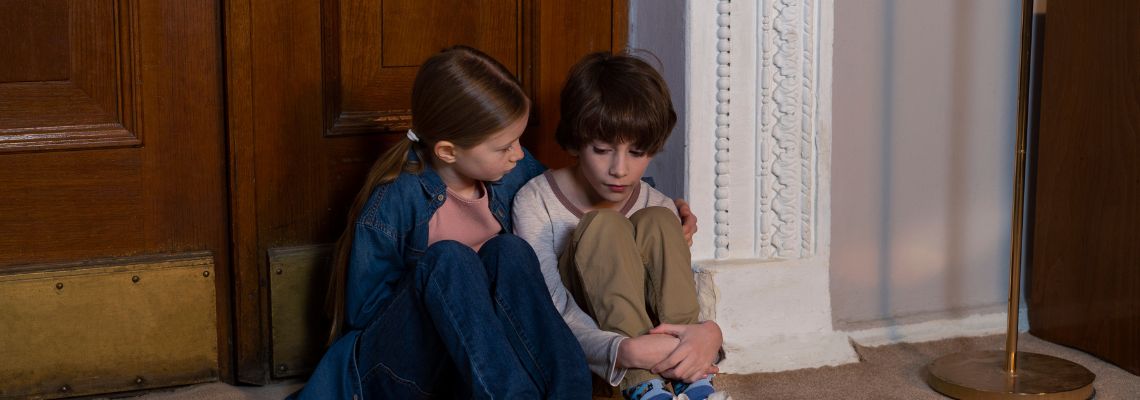
How Does Trauma Show Up Differently in Foster Children at Different Ages?
"Is this behavior normal for their age — or is it trauma?"
The answer is often both.
Trauma does not present the same way in every child, and it rarely looks the way people expect. A toddler's trauma response may look nothing like a teenager's, even when the underlying experiences are similar.
Understanding how trauma shows up at different developmental stages helps foster parents respond with empathy instead of confusion — and support healing instead of unintentionally reinforcing fear.
Trauma in Infants and Toddlers (Ages 0–3)
Very young children may not have language to express fear, loss, or confusion, but their bodies remember trauma.
Common trauma responses in infants and toddlers include:
- Excessive crying or difficulty being soothed
- Feeding or sleeping disruptions
- Delayed milestones
- Extreme clinginess or, conversely, lack of attachment
- Sensitivity to noise, touch, or transitions
These behaviors are often misunderstood as temperament issues. In reality, early trauma affects a child’s developing nervous system.
Open Arms Foster Care helps foster parents understand that consistent routines, gentle caregiving, and predictable responses are especially powerful at this stage. Healing begins with safety, not words.
Trauma in Preschool and Early Childhood (Ages 4–6)
As children gain language, trauma often shows up through play and behavior rather than direct conversation.
At this age, foster parents may notice:
- Aggressive or impulsive behavior
- Regressive behaviors (bedwetting, thumb-sucking)
- Intense separation anxiety
- Repetitive play themes involving danger or rescue
- Difficulty following rules despite understanding them
Children in this stage may relive trauma symbolically because their brains are still developing the ability to process events linearly.
Open Arms Foster Care trains families to look beyond “misbehavior” and ask, What is this child trying to communicate? Trauma-informed responses focus on emotional safety and co-regulation rather than punishment.
Trauma in School-Age Children (Ages 7–12)
School-age children often struggle with internal conflict. They may understand more about what has happened to them but lack the emotional tools to process it.
Trauma at this stage can appear as:
- Difficulty concentrating or learning challenges
- Emotional outbursts followed by shame or withdrawal
- Perfectionism or people-pleasing
- Low self-esteem or excessive guilt
- Trouble trusting adults or peers
Children may appear “fine” at school and unravel at home, where they feel safer.
At Open Arms Foster Care, foster parents receive guidance on advocating for trauma-informed educational support while maintaining consistent emotional presence at home. Stability across environments becomes critical during this stage.
Trauma in Adolescents (Ages 13–18)
Teenagers experience trauma through the lens of identity development. Loss, neglect, or abuse can deeply affect how they see themselves and the world.
Common trauma responses in adolescents include:
- Emotional numbness or detachment
- Anger, defiance, or risk-taking behaviors
- Withdrawal from relationships
- Difficulty trusting caregivers
- Struggles with autonomy and control
Adolescents may resist support while needing it deeply. Trauma can make dependence feel unsafe, even when caregivers are trustworthy.
Open Arms Foster Care emphasizes patience, respectful boundaries, and consistent availability. For teens, healing often begins with knowing someone will stay even when they push away.
Why Trauma Responses Can Change Over Time
A child’s trauma response may evolve as they grow, even within the same placement. Behaviors that were absent early on may emerge later as the child reaches new developmental stages.
This can be confusing for foster parents:
“Why is this coming up now?”
At Open Arms Foster Care, families are taught that trauma is often processed in layers. As children mature cognitively and emotionally, they revisit earlier experiences with new understanding. This is not regression, it is part of healing.
Ongoing support helps foster parents adjust expectations and strategies as children grow.
The Role of Trauma-Informed Foster Care
Understanding age-based trauma responses is not about labeling children. It is about responding appropriately.
Open Arms Foster Care provides:
- Trauma-informed foster parent training
- Ongoing case management
- Behavioral guidance rooted in child development
- Support navigating schools and systems
- Resources for therapeutic intervention when needed
This approach helps foster parents shift from “How do I stop this behavior?” to “How do I help this child feel safe enough to grow?”
Short Q & A – Common Foster Parent Questions
Can trauma show up differently in siblings of different ages?
Yes. The developmental stage plays a major role in how trauma is expressed, even when experiences overlap.
Why does my child act younger than their age?
Trauma can interrupt developmental progress. Regression is often a sign that the child is seeking safety.
Does improvement mean trauma is resolved?
Not necessarily. Trauma responses may resurface at later stages, especially during transitions.
How can I tell if behavior is trauma-related or typical development?
Open Arms Foster Care staff help foster parents assess patterns, intensity, and context rather than isolated incidents.
Why This Understanding Matters for Foster Parents
When trauma behaviors are misunderstood, children are often labeled as “difficult,” and foster parents feel discouraged. When trauma is understood, behavior becomes information, not a personal attack or failure.
Open Arms Foster Care equips families to:
- Respond with empathy instead of frustration
- Maintain realistic expectations
- Prevent placement disruptions
- Build trust and emotional safety over time
This understanding protects both the child and the foster family.
Final Thoughts
Trauma does not look the same at every age, but its impact is real at every stage. Foster parents are not expected to be trauma experts, but they do need the right support.
At Open Arms Foster Care, families are never left to interpret trauma alone. With education, guidance, and ongoing support, foster parents can meet children where they are developmentally and emotionally.
Healing does not happen all at once. It happens as children grow and as caregivers continue to show up with patience, understanding, and informed care.
Tags:

Openarms Fostercare
Related Posts
Why Routine and Stability Matter for Children in Foster Care
Children who enter foster care have already experienced some of life’s most disruptive events. Whether they’ve been separated from biological parents, moved between placements, or…
Read More
My Child Is Smart but Still Struggles in School – Could Testing Explain Why?
Your child is bright, curious, and clearly capable of understanding complex ideas. But report cards tell a different story. Homework takes hours, reading feels like…
Read More
